
Sudden facial weakness, arm weakness, speech difficulty, severe loss of balance or other new neurological symptoms require emergency medical care. Do not use the appointment form for an emergency.
A stroke can change movement, balance and daily life in an instant. Physiotherapy is an important part of recovery, helping the brain and body relearn movement and rebuild independence. If you or someone you love has had a stroke, here is what to expect from rehabilitation.
How a stroke affects movement
A stroke happens when blood flow to part of the brain is interrupted. Depending on the area affected, it can cause weakness or loss of movement on one side, problems with balance and coordination, changes in sensation and difficulty with everyday tasks. The effects vary widely from person to person, which is why rehabilitation is always individual.
When should rehabilitation start
Rehabilitation usually begins as soon as it is safe, often within days while still in hospital, and continues once the person is home. Early rehabilitation is often recommended when it is medically safe, because the nervous system is especially adaptable in the early period. That said, it is never too late to benefit. Meaningful progress can continue long after the early weeks with consistent, targeted work.
How physiotherapy helps
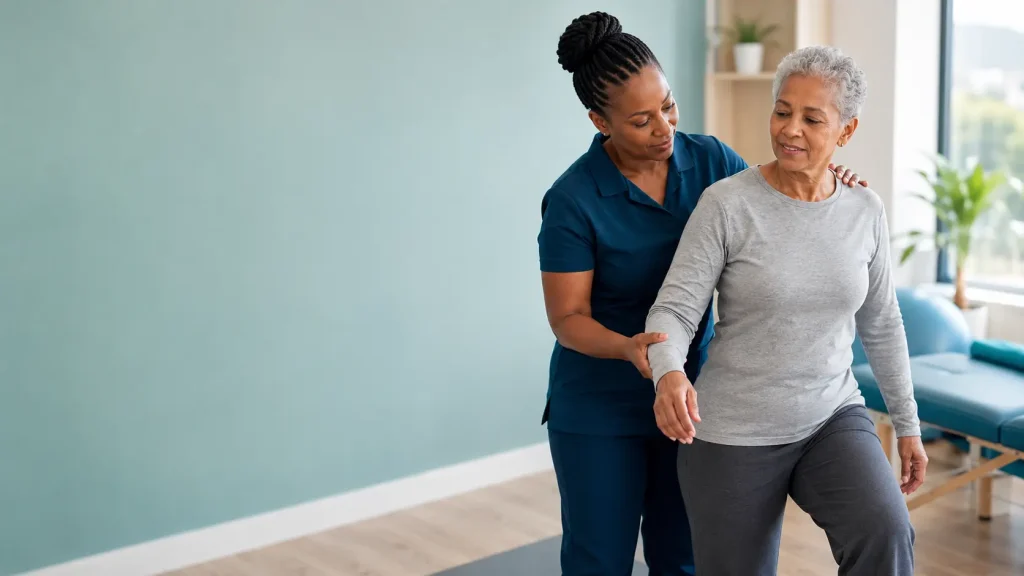
Physiotherapy after a stroke uses repeated, task specific practice to help the brain build new pathways for movement. In practical terms, that means working on the things that matter to daily life, such as standing, walking, balance, moving from sitting to standing and using an affected arm.
Treatment focuses on mobility, balance, coordination and functional independence. Every session builds on the last. Progress is measured against clear goals, so the person and their family can see how far they have come.
The value of home visits
Travel can be exhausting or simply impossible in the early stages of stroke recovery. Home visit physiotherapy brings individual care to the home environment. It also has a real advantage, because it lets the physiotherapist work on the actual spaces and tasks the person uses every day, from getting out of their own bed to moving safely around the kitchen.
Support for families and carers
Stroke recovery involves the whole household. Families and carers play a huge role between sessions. Rehabilitation may include guidance on safe handling, suitable exercises and ways to support day-to-day recovery, helping carers feel more informed and confident.
Staying patient and consistent
Recovery is rarely a straight line. There are faster weeks and slower weeks. Consistent, well-guided practice and steady support can help maintain progress over time, while small gains remain worth recognising.
When should physiotherapy start after a stroke?
Rehabilitation usually starts as early as it is safe, often within days in hospital, and continues once the person is home. Early rehabilitation is often recommended when it is medically safe, but it is never too late to benefit. Treatment can begin as soon as the person is medically stable.
This guide provides general information and does not replace an individual physiotherapy or medical assessment. Treatment suitability depends on your history, examination findings and medical circumstances.