
Recover, rebuild and return safely
Sports injury rehabilitation in Bryanston
Structured rehabilitation for runners, gym-goers, school athletes and recreational sportspeople who want to return with better strength, control and confidence.

A clear first stepYour first appointment focuses on understanding the problem and agreeing on a practical plan.
Individual careAssessment and plan tailored to you
Bryanston practiceWellness of Being, 340 Main Road
Clear fees and benefitsPlan rules and patient responsibility apply
Direct contactPhone, WhatsApp or appointment form
Understanding the service
Returning to sport takes more than waiting for pain to settle.
A sports injury assessment considers the painful area, how the injury happened, current training demands and any strength or movement factors that may affect recovery.
Rehabilitation is progressed in stages so that returning to training is based on function and readiness rather than guesswork.
Who this may be for
Sports injuries commonly assessed
The practice treats acute injuries, overuse problems and recurring conditions across a range of sports and activity levels.
Knee ligament and meniscus injuries
Achilles, patellar and other tendon problems
Rotator-cuff and shoulder injuries
Hamstring, calf and other muscle strains
Ankle sprains and recurrent instability
Running-related and training-load injuries
What to expect
A clear process from first assessment to progress review.
Listen and assess
Discuss the problem, relevant history, daily demands and the goals that matter to you.
Explain the findings
Receive a clear explanation of what was found and which factors may be contributing.
Begin the plan
Treatment may start when appropriate, with practical guidance for the time between visits.
Review and progress
The plan is adjusted according to response, function and the next stage of your goals.
The approach
A staged return-to-sport plan
Treatment is tailored to the injury and the physical demands of your sport. Early care may focus on pain, swelling and movement before progressing to strength, control and sport-specific tasks.
Progress is measured against practical goals so that each stage of training has a clear purpose.
Mobility and symptom management
Progressive strength and load tolerance
Balance, control and movement retraining
Sport-specific testing and return planning
Training-load guidance
Sudden changes in training volume, intensity or recovery can contribute to injury. The rehabilitation plan includes practical guidance on what to maintain, reduce or gradually reintroduce.
Treatment options
Hands-on treatment, taping, exercise and selected modalities may be used when appropriate. These support the rehabilitation plan rather than replacing progressive exercise.
Return with confidence
The final phase focuses on the movements and demands that matter in your sport, helping you return with a clearer understanding of readiness and risk.
Practical answers
Questions patients commonly ask
These answers are general. Your assessment and medical-aid rules may change what applies in your situation.
Should I rest completely after a sports injury?
Complete rest is not always necessary. The appropriate amount and type of movement depends on the injury. An assessment can clarify what to protect, what can continue and how activity should be progressed.
Do I need a scan before booking?
Not always. Many sports injuries can be assessed clinically. Imaging may be recommended when it is needed to confirm the diagnosis, exclude a more serious injury or guide the rehabilitation plan.
How long does sports rehabilitation take?
Recovery time depends on the tissue involved, injury severity, training demands and response to rehabilitation. A realistic estimate is discussed after assessment and updated as progress is measured.
Can physiotherapy reduce the chance of reinjury?
Rehabilitation can address strength, control, training load and movement factors associated with the injury. Risk cannot be removed completely, but a structured return plan may reduce avoidable recurrence.
Related care
Other services that may be relevant

Pain, injury and movement care
General physiotherapy in Bryanston
Explore this service →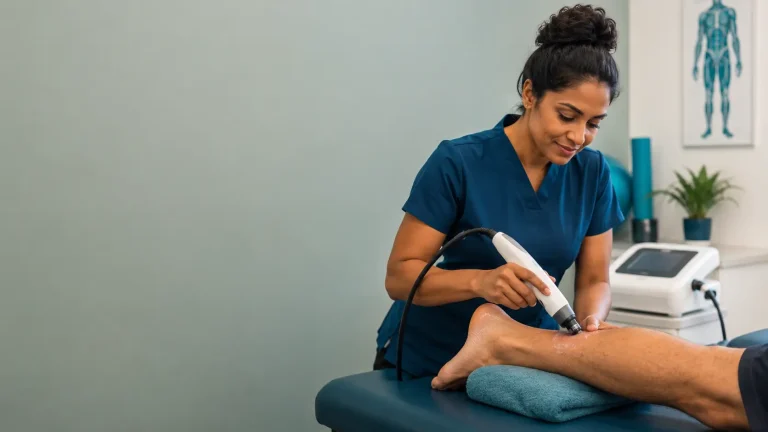
Selected treatment options within a broader rehabilitation plan
Shockwave and laser therapy
Explore this service →
Understand the pattern and build a workable plan
Pain and headache physiotherapy
Explore this service →Move from uncertainty to a clear next step
Request an individual assessment and a plan based on your symptoms and goals.
Appointments are available at the Bryanston practice, with selected home visits where appropriate.